
Browse Categories
Hi, I'm maddie

LCSW, Therapist, Private Practice Owner, and social media coach based in Raleigh, NC. My work centers on supporting children, teens, and young adults through anxiety, trauma, and meaningful life transitions — both in the therapy room and beyond it. My hope is this resource is a space for modern mental health insights that feel grounded, accessible, and human - what therapy should be!
Signs of Anxiety in Children: What Parents Should Know
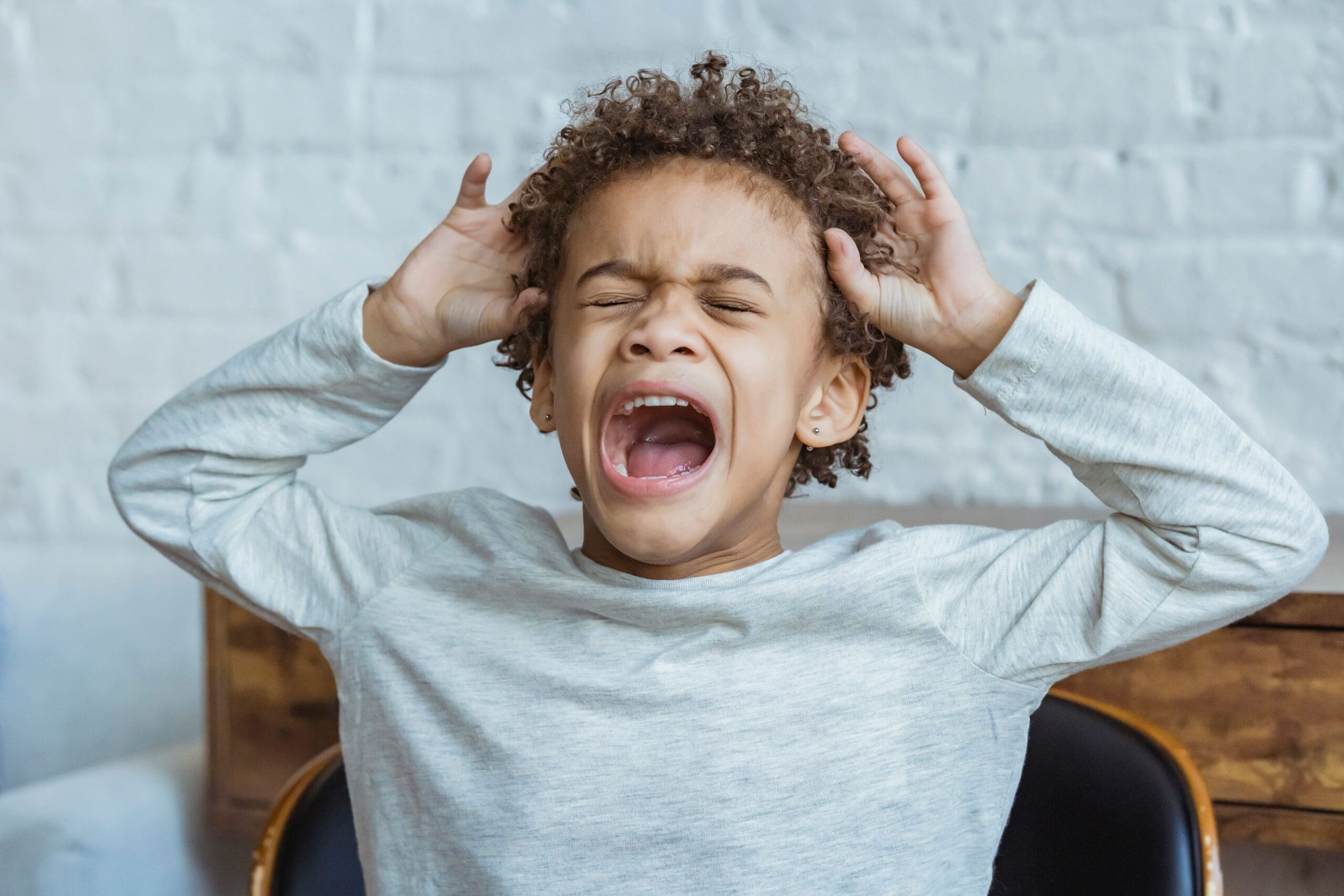
Sometimes anxiety in children is easy to spot.
A child says, “I’m scared.” They cry before school. They cling at drop-off. Or they tell you their stomach hurts before a birthday party, a test, or a new activity.
Other times, anxiety is much quieter.
It may look like a child who suddenly becomes irritable over small things. A bedtime routine that stretches from twenty minutes to two hours. A child who needs to ask the same question again and again, even after you’ve answered it. A kid who melts down before soccer practice, refuses to go upstairs alone, or says they feel sick every morning before school.
As a parent, this can be confusing. You may wonder: Is this normal kid stuff? Is this a phase? Are they being difficult? Am I missing something?
And honestly, that question makes sense. Childhood is full of big emotions, shifting fears, developmental leaps, and seasons where your child may need extra support. Not every worry means something is wrong. Not every meltdown is anxiety. But sometimes, the pattern starts to feel bigger than “just a phase.”
The tricky part is that children often do not experience or express anxiety the way adults do. They may not sit down and say, “I feel anxious about uncertainty, separation, social pressure, or making mistakes.” Instead, their anxiety may come out through behavior, body symptoms, avoidance, clinginess, perfectionism, or big emotional reactions.
Understanding the signs of anxiety in children can help you respond with more clarity and less panic. It can also help you decide when your child may benefit from additional support from a child therapist.
Anxiety in kids does not always look like anxiety
Adults often imagine anxiety as overthinking, racing thoughts, or verbalized worry. Children experience those things too, but they may not be able to describe them clearly.
A child may not say, “I’m worried something bad will happen if I go to school.”
They may say, “My stomach hurts.”
Or they may cry when it’s time to leave.
Maybe they get angry.
They may straight up refuse.
That doesn’t mean every stomachache or meltdown is anxiety. Children are still developing emotional language, coping skills, and nervous system regulation. But when certain patterns repeat, it can be helpful to wonder what the behavior is trying to communicate.
Anxiety often shows up as a child’s attempt to avoid discomfort or regain a sense of safety. The behavior may be frustrating on the outside, but underneath it, there is often a child who feels overwhelmed. If you want a broader overview of how children’s emotions, behavior, and development connect, you can read more about child mental health here.
Common signs of anxiety in children
The signs of anxiety in children can show up emotionally, physically, and behaviorally. Some children are visibly worried and tearful. Others become irritable, controlling, withdrawn, or avoidant.
Common signs may include:
- frequent worry, fear, or “what if” questions
- stomachaches, headaches, nausea, or feeling sick without a clear medical cause
- trouble sleeping, bedtime fears, or nightmares
- clinginess or difficulty separating from caregivers
- irritability, meltdowns, or emotional outbursts
- avoiding school, activities, sleepovers, or new experiences
- perfectionism or intense fear of making mistakes
- needing repeated reassurance
- difficulty with transitions or changes in routine
- restlessness, trouble concentrating, or seeming “on edge”
What matters most is the pattern. A child can have worries and still be doing okay. Anxiety becomes more concerning when it is persistent, intense, hard to recover from, or interfering with everyday life.
Signs of anxiety in young children
The signs of anxiety in young children can be especially hard to identify because younger kids often communicate through behavior more than words.
A preschool or early elementary-aged child may become very upset before separation, resist bedtime, fear being alone, or need repeated reassurance that a parent is coming back. They may ask the same question over and over, not because they didn’t hear the answer, but because the reassurance only helps for a moment before the worry returns.
Young children may also regress during stressful seasons. A child who was sleeping independently may suddenly need a parent nearby; A child who was using the bathroom without issue may have more accidents; A child who typically enjoys activities may begin resisting anything unfamiliar.
Again, this does not mean every regression or tantrum is anxiety. But when these patterns are frequent, intense, or connected to fear and avoidance, anxiety may be part of the picture.
What can trigger anxiety in children?
Childhood anxiety usually does not come from one single thing. More often, it develops from a combination of temperament, environment, stress, developmental stage, and life experience.
Some children are naturally more sensitive, cautious, observant, or slow to warm up. Their nervous systems may notice potential risk quickly. That temperament is not bad; it often comes with thoughtfulness, empathy, and awareness. But it can also make uncertainty feel harder.
Anxiety in kids can also increase during transitions or stressful seasons. Starting school, moving, family changes, friendship struggles, medical experiences, academic pressure, loss, trauma, or even a busy schedule can all create more emotional load.
Sometimes anxiety shows up when a child is trying to manage something that feels bigger than their coping skills. They may not know how to explain the fear, but their body and behavior tell the story.
School anxiety and avoidance
For many children, anxiety shows up most clearly around school.
School asks a lot of kids: separation, social interaction, performance, transitions, sensory input, rules, attention, and flexibility. Even when a child likes school overall, certain parts may feel overwhelming.
A child with school-related anxiety may complain of feeling sick in the morning, cry before drop-off, ask to stay home, avoid certain classes, or become very upset on Sunday nights. Some children hold it together all day and then fall apart at home because they have spent hours managing internal stress.
School avoidance can be especially stressful for parents because it often creates a daily dilemma: Do I push them? Do I let them stay home? Am I helping or making it worse?
The answer depends on the child and the situation. In general, anxiety often grows when avoidance becomes the main coping strategy. But pushing too hard without support can also backfire. This is where therapy can be helpful, not only for the child, but also for parents trying to respond in a way that is supportive and effective. For more on anxiety and how it works in the nervous system, you can read our guide to anxiety and stress here.
When is anxiety typical, and when should you seek support?
Some anxiety is part of normal development. Children may fear the dark, worry about separation, feel nervous before new experiences, or need extra reassurance during change.
The question is not, Does my child ever feel anxious?
The better question is, Is anxiety starting to limit their life?
It may be time to seek support if anxiety is:
- interfering with school, sleep, friendships, or family life
- causing frequent distress or emotional outbursts
- leading to repeated avoidance of normal activities
- creating ongoing physical complaints without a clear medical explanation
- making transitions or separations consistently overwhelming
- difficult for your child to recover from, even with support
You do not need to wait until anxiety becomes severe to ask for help. Early support can help children build coping skills before avoidance, fear, or reassurance-seeking patterns become more deeply established.
How therapy helps children with anxiety
Therapy for children with anxiety is not about telling a child to “stop worrying.” If it were that simple, most anxious kids would have handled it already.
Child therapy helps children understand what anxiety feels like, name their emotions, and learn tools to manage fear in developmentally appropriate ways. Depending on the child’s age, therapy may include play, art, storytelling, CBT-informed strategies, parent coaching, and gradual exposure to feared situations in a safe and supported way.
For children, therapy often works best when it feels approachable and not overly ‘adult’. A child may not be able to sit down and talk through their worries the way an adult would. Instead, they may process through play, metaphor, creative activities, games, movement, and simple language that helps them understand what is happening in their body and brain.
A therapist can help a child begin to externalize anxiety, which means seeing anxiety as something they experience rather than something that defines them. This can be powerful. Instead of “I am bad,” “I am difficult,” or “I can’t do this,” a child can start to understand, “My anxiety is trying to protect me, but I can learn how to handle it.”
Therapy can help children:
- build emotional language and coping skills
- understand how anxiety shows up in their body
- practice calming and grounding strategies
- reduce avoidance in manageable steps
- develop confidence through small, supported successes
- learn how to tolerate uncertainty and discomfort
- identify anxious thoughts and practice more helpful ones
- strengthen problem-solving and flexibility
- help parents respond without accidentally reinforcing anxiety
Parent involvement is often an important part of therapy for kids. This does not mean parents caused the anxiety or are doing something wrong. It means children are still learning how to regulate, and parents are a major part of their support system.
Therapy can help parents understand what is happening beneath the behavior, how to respond to anxiety without increasing avoidance, and how to support brave steps in ways that feel realistic for the child. Sometimes the most helpful work begins with helping parents feel less alone and more confident in how they respond.
If you are curious about different therapy approaches and how they work, you can read more about therapy tools and methods here.
What parents can do at home
If your child is struggling with anxiety, your response matters. Not because you need to be perfect, but because children often borrow calm from the adults around them before they can fully generate it themselves.
Here are a few starting points:
1. Validate the feeling without making the fear bigger.
You can say, “I can tell this feels really scary,” without saying, “You’re right, this is too much.” The goal is to help your child feel understood while still communicating confidence that they can handle hard things with support.
2. Look for the pattern underneath the behavior.
Instead of only asking, “How do I stop this behavior?” try asking, “What might this behavior be helping my child avoid or communicate?” Anxiety often hides underneath refusal, irritability, perfectionism, or repeated reassurance-seeking.
3. Support small brave steps.
Avoidance brings short-term relief, but it often makes anxiety stronger over time. Small, manageable steps toward the feared situation can help children build confidence without feeling flooded.
4. Reduce reassurance loops.
Reassurance can help briefly, but when children need the same answer again and again, it may keep the anxiety cycle going. A therapist can help you find language that supports your child without getting stuck in repeated reassurance.
5. Get support when the pattern persists.
You do not have to figure this out alone. Sometimes even one parent consultation can help you understand whether what you’re seeing is anxiety, what responses may help, and when therapy could be useful.
You do not have to wait until things feel unmanageable
If you are reading this, chances are you are already paying attention. That matters.
Anxiety in children can be confusing because it often shows up through behavior, body symptoms, or emotional intensity rather than clear words. You do not need to diagnose your child on your own, and you do not need to wait until things feel severe to ask for guidance.
Working with a child therapist can help you understand what is developmentally typical, what may be anxiety, and what kind of support could help your child feel more confident and regulated. Therapy can also help you as a parent feel more grounded in your responses, especially when you are stuck wondering, Am I supporting them, pushing too hard, or accidentally making this worse?
Where to start?
At Flourish Wellness, we support children and families navigating anxiety, stress, transitions, and big emotions through developmentally informed therapy. For children, we offer in-person therapy in Raleigh, North Carolina. For parents and caregivers located in NC, SC, VA, MA, or MN, we can also provide virtual parent consultation or therapy support depending on your needs and location.
Sometimes support starts with the child. Sometimes it starts with a parent wanting to understand, Am I responding to this the right way?
Both are valid places to begin.
If your child’s anxiety is starting to affect school, sleep, relationships, transitions, or daily life, connecting with a therapist can help you better understand what is happening and what next steps may be most supportive. Even a one-time parent consultation can offer clarity, reassurance, and practical direction.
You do not have to wait until your child is in crisis. Support can begin with noticing the pattern, asking good questions, and getting help from someone who understands child anxiety and child development.
If you are looking for child therapy in Raleigh or parent support across NC, SC, VA, MA, or MN, Flourish Wellness would be honored to help you find a starting point.
Leave a Reply
Hi, I'm maddie
LCSW, Therapist, Private Practice Owner, and social media coach based in Raleigh, NC. My work centers on supporting children, teens, and young adults through anxiety, trauma, and meaningful life transitions — both in the therapy room and beyond it. My hope is this resource is a space for modern mental health insights that feel grounded, accessible, and human - what therapy should be!

Be the first to comment