
Browse Categories
Hi, I'm maddie

LCSW, Therapist, Private Practice Owner, and social media coach based in Raleigh, NC. My work centers on supporting children, teens, and young adults through anxiety, trauma, and meaningful life transitions — both in the therapy room and beyond it. My hope is this resource is a space for modern mental health insights that feel grounded, accessible, and human - what therapy should be!
What Is EMDR Therapy and How Does It Help Trauma?

EMDR therapy can sound a little strange at first.
Eye movements? Bilateral stimulation? Reprocessing memories?
For many people, the first reaction is some version of: Wait… what are we actually doing here?
That makes sense. EMDR is different from what many people picture when they think of therapy. It is not just talking through what happened, analyzing every detail, or trying to convince yourself to “think differently.” EMDR is a structured, evidence-based therapy that helps the brain and nervous system process distressing experiences that may still feel emotionally or physically stuck. EMDR as an evidence-based therapy for PTSD that helps people process trauma while paying attention to back-and-forth movements or sounds.
At Flourish Wellness, we often talk with clients who understand their experiences logically, but still feel reactive, anxious, shut down, or triggered in their bodies. That gap between what I know and what I feel is one of the places EMDR therapy can be especially helpful.
What is EMDR therapy?
EMDR stands for Eye Movement Desensitization and Reprocessing. It is a type of therapy designed to help people process distressing memories and experiences so they feel less emotionally intense and less present in daily life.
EMDR was originally developed to support people healing from trauma and PTSD. Today, it is also commonly used for anxiety, panic, grief, painful life experiences, and negative beliefs that feel difficult to shift through talk therapy alone. EMDRIA describes EMDR as an extensively researched therapy designed to help people recover from trauma and PTSD.
The goal of EMDR is not to erase a memory. It is also not hypnosis, mind control, or a process where you have to tell every detail of what happened over and over again.
Instead, EMDR helps the brain reprocess distressing material so the memory becomes less emotionally charged. You may still remember what happened, but it no longer feels as if your body is reliving it in the present.
Why trauma can feel stuck
Trauma is not only a memory. It can become a body response, a belief, a trigger, or a pattern.
Someone may logically understand, I am safe now, while their body still reacts with panic, tension, numbness, or shutdown. A sound, a facial expression, a certain tone of voice, or a specific situation can activate the nervous system before the thinking brain has time to catch up.
This is one reason trauma can feel so confusing. The present moment may not be dangerous, but the body responds as if something familiar is happening again.
When distressing experiences are not fully processed, they can remain connected to strong emotions, body sensations, and beliefs about yourself or the world. This might sound like:
- I am not safe.
- It was my fault.
- I cannot trust myself.
- I have no control.
- Something bad is going to happen.
EMDR therapy works with these stuck points by helping the brain and body process the experience in a new way.
The brain piece: how trauma affects fear and memory
One of the most helpful ways to understand EMDR is to look at what trauma can do in the brain.
A simple version: trauma can disrupt how the brain stores and retrieves memory.
The amygdala is involved in detecting threat and activating fear responses. The hippocampus helps organize memory and context, including when and where something happened. The prefrontal cortex supports reasoning, reflection, and emotional regulation. Trauma and PTSD involve changes in brain circuits related to fear, memory, and regulation, including these areas.
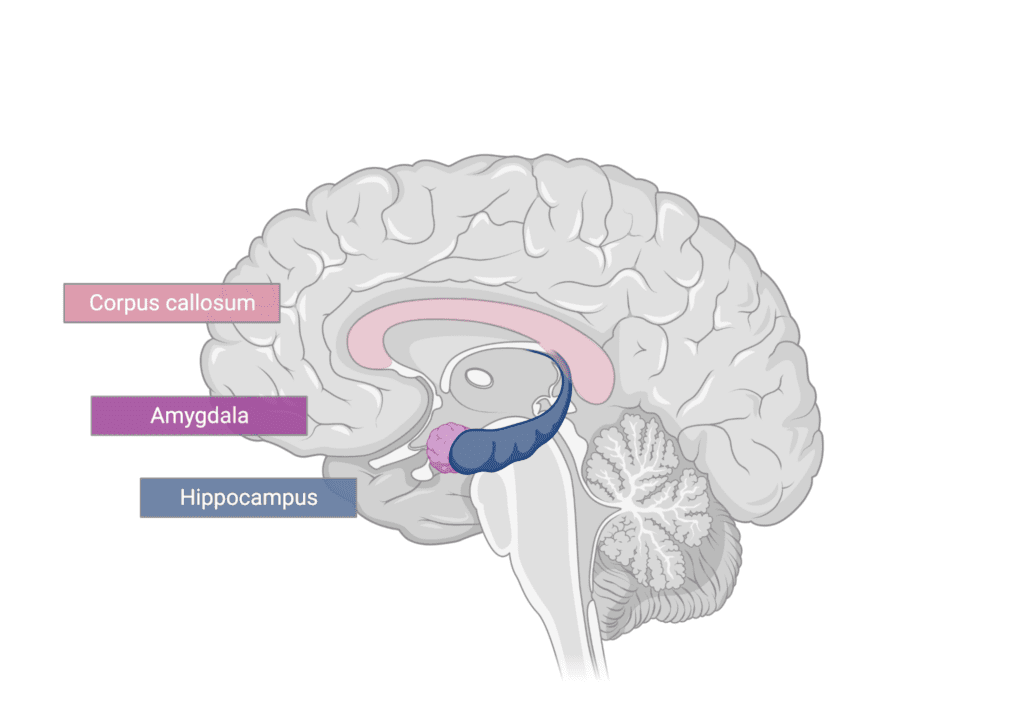
When something overwhelming happens, the brain may store the experience in a way that remains highly linked to fear. Instead of feeling like, That happened then, the memory can feel emotionally and physically present now.
This does not mean trauma is literally “stored in one part of the brain” and then moved to another. That’s a little too neat for how the brain actually works – but its pretty close! EMDR helps the brain reprocess distressing memories so they become less tied to the fear response and more integrated into ordinary memory.
A more accurate way to say it is this:
EMDR helps the brain and nervous system update the memory.
The memory is still there, but the body no longer has to respond as if the threat is still happening.
How does EMDR therapy work?
EMDR uses something called bilateral stimulation, which means stimulation that moves back and forth across the body. This may involve guided eye movements, tapping, or sounds.
During EMDR, a trained therapist helps you focus on a distressing memory, image, belief, or body sensation while also using bilateral stimulation. This process appears to support the brain’s natural ability to process information and reduce the emotional intensity connected to the memory. EMDR involves focusing on an upsetting memory while paying attention to back-and-forth movement or sound, helping the person stay present while processing the past.
EMDR is not about flooding you with emotion or pushing you into something before you are ready. A good EMDR therapist spends time preparing, building grounding skills, and making sure the work feels tolerable.
The process usually includes:
- understanding your history and current symptoms
- building coping and grounding tools
- identifying target memories or themes
- using bilateral stimulation to support reprocessing
- checking body sensations, emotions, and beliefs
- closing sessions with stabilization and regulation
This is one reason EMDR can be so helpful for people who feel like talk therapy has given them insight, but not enough relief. Insight matters. But sometimes the nervous system needs more than explanation.
What can EMDR help with?
EMDR is best known for trauma and PTSD, but many clinicians also use it for other distressing experiences that feel emotionally stuck.
EMDR may help with:
- PTSD and trauma symptoms
- childhood trauma or emotional trauma
- anxiety and panic
- grief or painful life transitions
- distressing memories
- negative self-beliefs
- triggers that feel disproportionate to the present moment
For many, EMDR can be especially relevant when earlier experiences are still shaping current relationships, anxiety, self-worth, or a sense of safety. Sometimes the issue is not that you do not understand yourself. It is that your body has not fully caught up to what your mind already knows.
What to expect in EMDR therapy
EMDR therapy does not usually begin with jumping straight into the hardest memory. At least, it should not.
The beginning of EMDR therapy often includes getting to know your history, understanding what is bringing you into therapy, and identifying what feels most important to work on. Your therapist may ask about trauma history, anxiety symptoms, current stressors, relationships, coping skills, and what tends to activate your nervous system.
Preparation is a major part of the process. This may include grounding skills, resourcing, emotional regulation tools, and strategies to help you stay connected to the present. For some clients, especially those with complex trauma or a history of feeling easily overwhelmed, this preparation phase may take longer. That is not a failure. It is trauma-informed pacing.
Once you and your therapist decide you are ready, EMDR processing typically focuses on a specific target. This may be a memory, image, belief, body sensation, or current trigger connected to the distress. While using bilateral stimulation, your therapist guides the process and helps you notice what comes up.
A session may feel emotional, but it should not feel out of control. The therapist’s role is to help you stay within a window where processing can happen without becoming overwhelming.
How long does EMDR take?
This is one of the most common questions people ask: How long does EMDR therapy take?
The honest answer is: it depends.
EMDR is typically delivered one to two times per week for a total of about 6–12 sessions, though some people benefit from fewer sessions and others need many more. If you are needing more, do not judge yourself on this! Trauma is a tricky thing, and may need more time than anticipated.
The timeline can depend on several factors, including:
- whether the trauma was a single event or repeated over time
- whether the trauma happened in childhood or adulthood
- current safety and support
- nervous system readiness
- dissociation, shutdown, or emotional overwhelm
- the number of memories or themes being processed
- avoidance of the topic in session (which can be fair!)
- switching between EMDR and talk therapy
- consistency of sessions
Some people experience meaningful relief after processing a specific memory. Others need longer-term work, especially when trauma is complex, developmental, or connected to many areas of life.
Ethical EMDR therapy should not promise a perfect timeline. The goal is not speed. The goal is safe, effective processing that actually holds.
Is EMDR safe for children and teens?
EMDR can be used with children and teens when provided by a trained clinician who understands development, pacing, and emotional safety.
With younger clients, EMDR may look different than it does with adults. It may include more preparation, caregiver involvement when appropriate, creative tools, play-based language, or shorter periods of processing. The therapist should adapt the work to the child or teen’s age, needs, and ability to stay regulated.
For teens, EMDR may help when distressing experiences, anxiety, panic, or negative beliefs continue to show up in daily life. For children, it can be used thoughtfully when trauma or stressful experiences are affecting emotions, behavior, sleep, or sense of safety.
The key is not just whether EMDR is available. The key is whether the therapist uses it in a developmentally appropriate and trauma-informed way.
Is EMDR right for everyone?
EMDR can be powerful, but it is not always the first step.
Some people need stabilization before trauma processing. This is especially true if someone is currently unsafe, highly dissociated, overwhelmed by daily life, or lacking enough coping tools to manage activation between sessions.
That does not mean EMDR will never be appropriate. It may simply mean the work needs to start with grounding, safety, emotional regulation, and building trust before processing traumatic memories directly.
A trained EMDR therapist should help determine what pace makes sense. Therapy should feel collaborative, not forced.
EMDR therapy at Flourish Wellness
At Flourish Wellness, we offer EMDR therapy for clients navigating trauma, anxiety, painful past experiences, and distressing memories that still feel present in daily life.
Our approach is trauma-informed, collaborative, and paced with care. We do not believe healing happens by forcing people to relive their hardest moments before they feel ready. Instead, EMDR therapy begins with understanding your story, building safety, and helping your nervous system have enough support to process what has felt stuck.
For young adults, EMDR may be helpful when anxiety, relationship patterns, self-doubt, or emotional reactions feel connected to earlier experiences. For teens and children, EMDR can also be adapted thoughtfully by trained clinicians to support trauma healing in a way that fits their developmental stage.
If you are wondering whether EMDR therapy could help you, you do not need to have it all figured out before reaching out. That is part of what therapy is for!
You can learn more about EMDR therapy at Flourish Wellness here:
https://flourishwellnesspllc.com/emdr-therapy
Healing from trauma is not about deleting the past. It is about helping your brain and body recognize that the past is no longer happening now.
Leave a Reply
Hi, I'm maddie
LCSW, Therapist, Private Practice Owner, and social media coach based in Raleigh, NC. My work centers on supporting children, teens, and young adults through anxiety, trauma, and meaningful life transitions — both in the therapy room and beyond it. My hope is this resource is a space for modern mental health insights that feel grounded, accessible, and human - what therapy should be!

hello world
hello world